
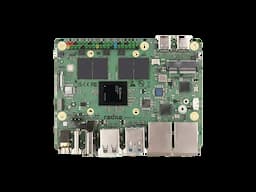
Radxa Dragon Q8B: Setups Compared
One board, benchmarked in different setups, side by side
Tested by Bret Weber Last updated
What's Different
The same Radxa Dragon Q8B, benchmarked in 3 setups.
Operating System
- Armbian (Debian 14 forky) (Standard)
- Armbian (Debian 14 forky)
- Arch Linux
- Arch Linux
- Armbian (Debian 13 trixie)
- Armbian (Debian 13 trixie)
Kernel
- Armbian (Debian 14 forky) (Standard)
- 7.0.11-vendor-sc8280xp
- Arch Linux
- 7.0.9-1-radxa-qcom+
- Armbian (Debian 13 trixie)
- 7.0.2-vendor-sc8280xp
Tested
- Armbian (Debian 14 forky) (Standard)
- 16 July 2026
- Arch Linux
- 10 July 2026
- Armbian (Debian 13 trixie)
- 12 May 2026
| Setting | Armbian (Debian 14 forky)Standard | Arch Linux | Armbian (Debian 13 trixie) |
|---|---|---|---|
| Operating System | Armbian (Debian 14 forky) | Arch Linux | Armbian (Debian 13 trixie) |
| Kernel | 7.0.11-vendor-sc8280xp | 7.0.9-1-radxa-qcom+ | 7.0.2-vendor-sc8280xp |
| Tested | 16 July 2026 | 10 July 2026 | 12 May 2026 |
Everything else matched: the same 32GB board, stock clocks, performance governor and the standard test cooling.
| Specification | Radxa Dragon Q8B Armbian (Debian 14 forky) | Radxa Dragon Q8B Arch Linux | Radxa Dragon Q8B Armbian (Debian 13 trixie) |
|---|---|---|---|
| Basic Specifications | |||
| Tested Setup | |||
| Price | $676.99 | ||
| RAM | 32GB | ||
| SoC | |||
| Architecture | ARM | ||
| CPU Cores | 4× Cortex-X1 @ 3.0GHz
4× Cortex-A78 @ 2.4GHz | ||
| Environment | Radxa Dragon Q8B Armbian (Debian 14 forky) | Radxa Dragon Q8B Arch Linux | Radxa Dragon Q8B Armbian (Debian 13 trixie) |
|---|---|---|---|
| Last Tested | 16 July 2026 | 10 July 2026 | 12 May 2026 |
| System Configuration | |||
| OS Version | Armbian 26.8.0-trunk.376 forky | Arch Linux | Armbian-unofficial 26.05.0-trunk trixie |
| Kernel Version | 7.0.11-vendor-sc8280xp | 7.0.9-1-radxa-qcom+ | 7.0.2-vendor-sc8280xp |
| CPU Governor | performance | performance | performance |
| GPU Information | |||
| GL Renderer | FD690 | FD690 | FD690 |
| GL Vendor | freedreno | freedreno | freedreno |
| GL Version | 4.6 (Compatibility Profile) Mesa 26.1.4-1 | 4.6 (Compatibility Profile) Mesa 26.1.4-arch1.1 | 4.6 (Compatibility Profile) Mesa 25.0.7-2 |
| Vulkan Device | Turnip Adreno (TM) 690 | N/A | Turnip Adreno (TM) 690 |
| Vulkan Driver Version | 109056004 | N/A | 104857607 |
| Hardware Setup | |||
| Boot Device | Crucial P5 Plus 1024GB (M.2 NVMe) | Intenso 256GB (M.2 NVMe) | Crucial P5 Plus 1024GB (M.2 NVMe) |
Every figure above comes from hardware run in-house by Bret Weber, on the exact OS build, kernel, firmware and boot device listed here. Boards are tested to a fixed procedure so results stay comparable between them: see our testing methodology for how each benchmark is run.
CPU Performance
Processor performance across single and multi-core workloads
Geekbench 6
Higher Scores are Better
7-Zip Benchmark
Higher Scores are Better
UnixBench
Higher Scores are Better
CPU Mining (cpuminer-multi)
Higher Hashrates are Better
Geekbench 7
Higher Scores are Better
Only this board has been tested so far, so there is nothing to compare against yet.
High Performance Linpack
Higher Scores are Better
Only this board has been tested so far, so there is nothing to compare against yet.
PassMark CPU
Higher Scores are Better
Only this board has been tested so far, so there is nothing to compare against yet.
Memory Performance
Memory bandwidth and throughput benchmarks
TinyMemBench
Higher Bandwidth is Better
PassMark RAM
Higher Scores are Better
Only this board has been tested so far, so there is nothing to compare against yet.
GPU Performance
Graphics rendering with OpenGL and Vulkan, plus raw Vulkan compute throughput
glmark2 (OpenGL)
Higher Scores are Better
vkmark (Vulkan)
Higher Scores are Better
SuperTuxKart (Gaming)
Higher FPS is Better
Only this board has been tested so far, so there is nothing to compare against yet.
AI & LLM Performance
Large Language Model inference performance
Ollama LLM Benchmark
Higher Scores are Better
Storage Performance
Disk I/O throughput measured with FIO
fio Storage Performance - microSD
Higher Speeds are Better • Raspberry Pi 64GB (64GB microSD)
fio Storage Performance - M.2 NVMe
Higher Speeds are Better • Crucial P5 Plus (1024GB M.2 NVMe)
fio Storage Performance - UFS
Higher Speeds are Better • Radxa UFS (128GB UFS)
Only this board has been tested so far, so there is nothing to compare against yet.
Network Performance
Ethernet and WiFi throughput measured with iPerf3
iPerf3 Network Performance
Higher Speeds are Better
Power & Thermal
Power consumption at idle and under various workloads
Power Consumption
Lower is "Better"