
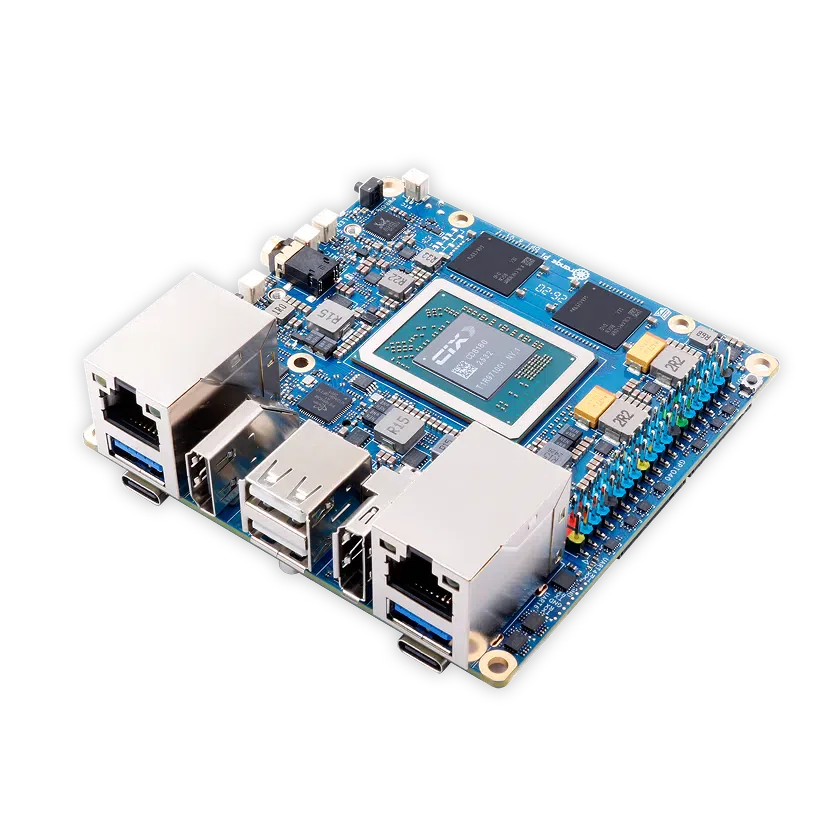
Orange Pi 6 Arrives With the CIX P1, Dual 2.5GbE and Up to 24GB RAM
The Orange Pi 6 lands below the 6 Plus with the same CIX P1 silicon, up to 24GB RAM and dual 2.5GbE. Here's how the two compare, and why the timing is odd.
Orange Pi have quietly put up a product page for the Orange Pi 6, a CIX P1 board that slots in just below the Orange Pi 6 Plus we've already had on the bench. It's an interesting one, mostly because of the timing, but we'll get to that. If you've been following the high-end ARM SBC space at all, the CIX P1 silicon will already be familiar to you, and this is Orange Pi's second board built around it. Let's get into what's actually on offer here, and where it sits next to its bigger sibling.
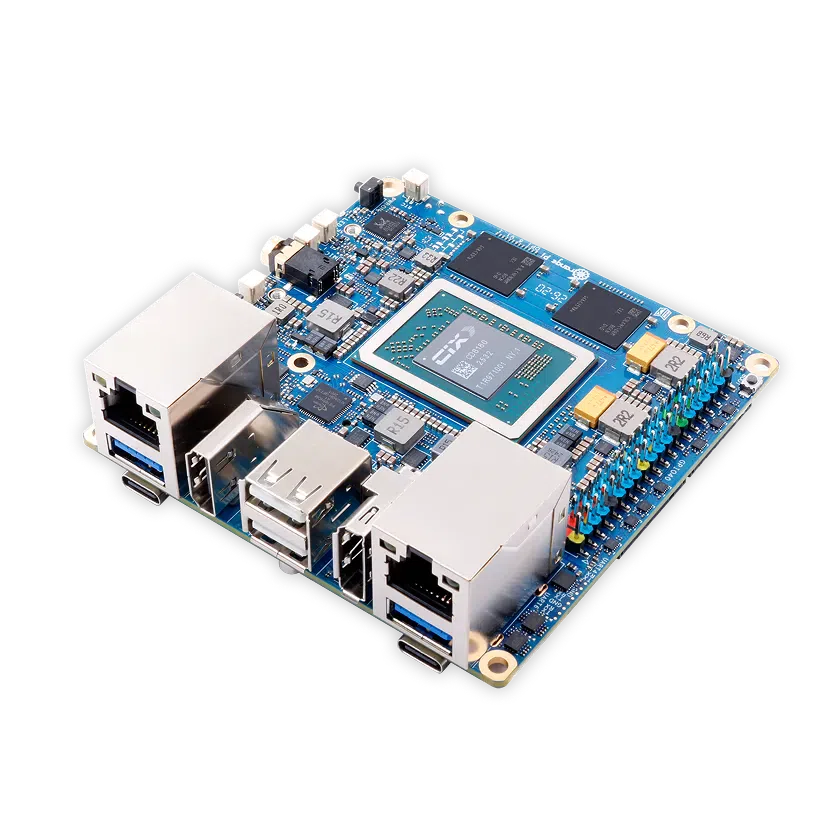
The CIX P1 Again#
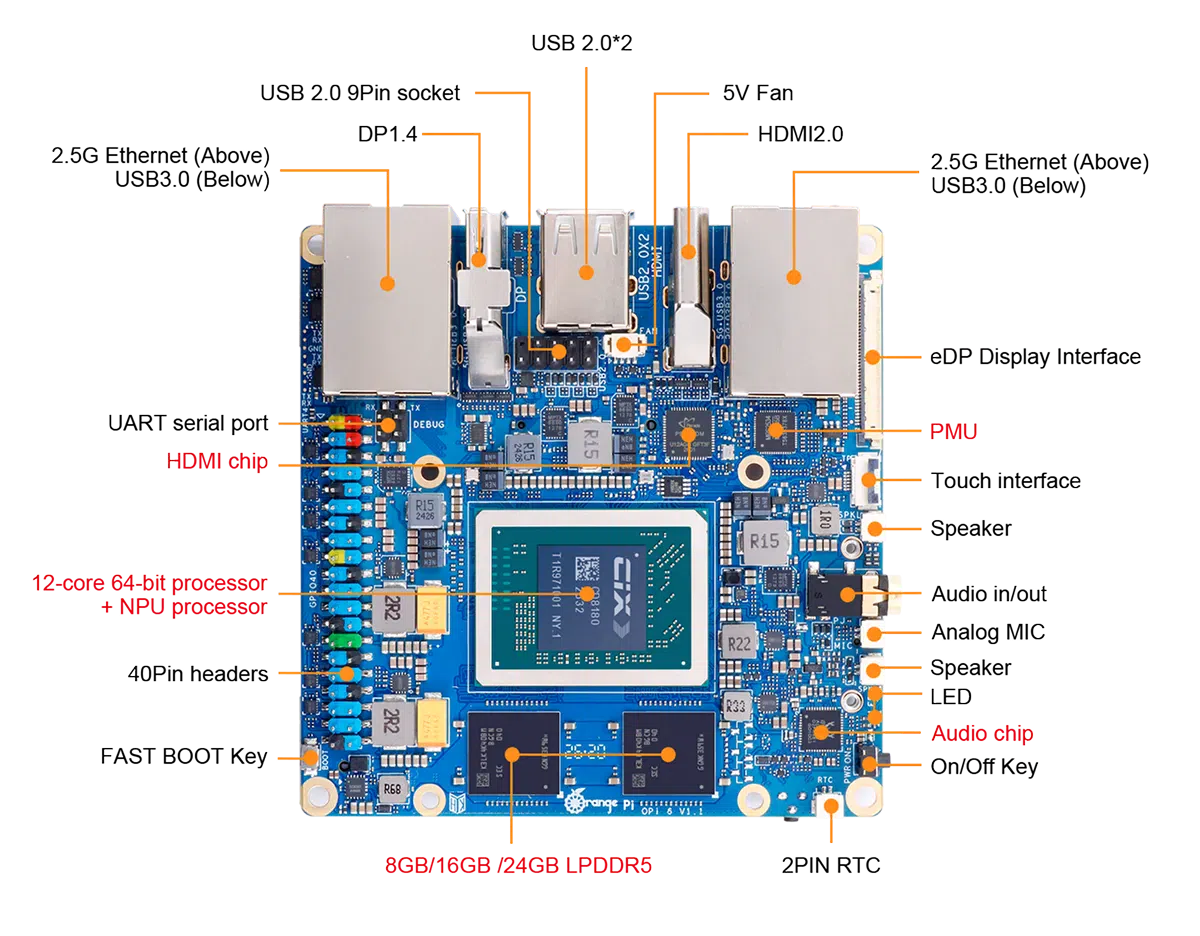
The Orange Pi 6 runs the same CIX P1 (CD8180) SoC as the 6 Plus, so the core silicon story is unchanged. You're getting a 12-core 64-bit chip in a tri-cluster arrangement: 4x Cortex-A720 big cores, 4x Cortex-A720 medium cores, and 4x Cortex-A520 LITTLE cores. Graphics are handled by an Arm Immortalis-G720 MC10 with Vulkan 1.3, OpenGL ES 3.2, OpenCL 3.0 and hardware ray-tracing, which is a properly capable GPU by SBC standards.
The headline figure, because there always is one these days, is the AI performance. Orange Pi quote 28.8 TOPS from the dedicated NPU and 45 TOPS total across the CPU, GPU and NPU combined. That's the same 45 TOPS total that the 6 Plus advertises, which makes sense given they're running identical silicon. As ever, comparing TOPS figures across vendors is a bit of a mug's game, so I'd take that number with the usual pinch of salt until there's some real-world inference testing to back it up.
Orange Pi 6 Specifications#
| Spec | Detail |
|---|---|
| SoC | CIX P1 (CD8180) |
| CPU | 4x Cortex-A720 (big) + 4x Cortex-A720 (medium) + 4x Cortex-A520 (LITTLE) |
| GPU | Arm Immortalis-G720 MC10 |
| NPU | 28.8 TOPS NPU / 45 TOPS total |
| RAM | 8GB / 16GB / 24GB LPDDR5 (128-bit, up to 6400MT/s) |
| Storage | 2x M.2 Key-M 2280 NVMe (PCIe 4.0 x4), MicroSD, 64Mbit SPI flash |
| Ethernet | 2x 2.5GbE |
| Wireless | Optional Wi-Fi 6 + Bluetooth 5.4 via M.2 Key-E |
| Display | DisplayPort 1.4 (4K@120Hz), HDMI 2.0 (4K@60Hz), eDP, 2x USB-C DP |
| Camera | 2x 4-lane MIPI-CSI |
| USB | 2x USB 3.0, 2x USB 2.0, 2x Type-C 3.0 full-function, USB 2.0 header |
| GPIO | 40-pin header (UART, I²C, SPI, PWM) |
| Power | Dual Type-C PD 20V (65W/100W adapters) |
| Dimensions | 90 x 90mm, 106g |
| OS | OpenHarmony, Debian, Ubuntu, Android, Windows, ROS 2 |
Orange Pi 6 vs 6 Plus: What's the Difference?#
This is the bit that matters, because on paper the two boards are awfully similar. Same SoC, same GPU, same NPU, the same dual M.2 NVMe storage, and the same set of display outputs. The differences come down to two things that will matter a great deal to some of you and not at all to others.
| Spec | Orange Pi 6 | Orange Pi 6 Plus |
|---|---|---|
| SoC | CIX P1 (CD8180) | CIX P1 (CD8180) |
| RAM options | 8 / 16 / 24GB | 32 / 64GB |
| Ethernet | 2x 2.5GbE | 2x 5GbE |
| GPU | Immortalis-G720 MC10 | Immortalis-G720 MC10 |
| NPU | 45 TOPS total | 45 TOPS total |
| Storage | 2x M.2 NVMe (PCIe 4.0 x4) | 2x M.2 NVMe (PCIe 4.0 x4) |
| Power | Dual-C PD (65W/100W) | Dual-C PD 100W |
| Price | Not yet announced | ~$260 (32GB) |
So the two real differentiators are RAM and networking. The 6 tops out at 24GB of LPDDR5, whilst the 6 Plus starts where the 6 finishes and climbs all the way to 64GB. On the network side, the 6 gives you dual 2.5GbE, whereas the 6 Plus steps up to dual 5GbE. Everything else is, as far as the spec sheets tell us, identical.
A Slightly Odd Time For It#
Here's what I find curious about all this. The Orange Pi 6 Plus turned up back in October 2025, and we got the 32GB model on the bench (you can see the full specs and benchmarks on its sbc.compare page). Normally you'd expect the cheaper, more cut-down model to lead the charge and the premium variant to follow on later for the people who want to spend more. Orange Pi have done it the other way round, launching the bigger, faster, more expensive Plus first and only now filling in the more modest 6 underneath it.
It's not the end of the world, and I can see the logic if the Plus was the halo product they wanted to lead with, but it does make the 6 feel a touch like an afterthought arriving a good eight months late. The 24GB RAM ceiling is the part that gives me pause. If you're the sort of person drawn to a 45 TOPS, 12-core board with dual NVMe slots, there's a fair chance you'd also appreciate more than 24GB to play with, and that's exactly the point where you're nudged towards the Plus instead.
The drop from 5GbE to 2.5GbE is easier to justify. Dual 2.5GbE is still plenty for the vast majority of use cases, whether that's a NAS, a router project, or just a board that needs a couple of fast links. 5GbE is lovely to have, but you need the rest of your network to keep up with it before it earns its keep, and not many home setups do.
Pricing and Availability#
No price has been announced for the Orange Pi 6 yet, which is a bit of a shame as it's the single most important detail for working out whether this board makes sense. The 6 Plus 32GB sits at around $260, so the 6 needs to come in meaningfully below that to justify its existence given the lower RAM ceiling and slower networking. If it lands too close to the Plus, I'm not sure who it's really for. If Orange Pi price it sensibly, though, it could be a tidy little entry point into CIX P1 territory for people who don't need 64GB of RAM or 5GbE.
I'll update this once pricing firms up, and the plan is to get one benchmarked on sbc.compare so we can see how it stacks up against the Plus and the rest of the high-end field. In the meantime, our Raspberry Pi 5 vs Orange Pi 6 Plus comparison gives you a decent feel for what the CIX P1 brings to the table over the board everyone already knows.
My Take#
The Orange Pi 6 is a perfectly sensible board on paper, and the CIX P1 is genuinely capable silicon. My only real hesitation is working out where it fits. It's the same chip, the same GPU and the same NPU as the 6 Plus, with the only meaningful cuts being RAM and networking, so the whole thing hinges entirely on price. Get that right and it's an easy recommendation for people who want a CIX P1 board without paying for headroom they'll never use. Get it wrong and the Plus simply swallows it whole.
If you're weighing up where these boards land against the wider field, it's worth a look at my Orange Pi 5 Plus review for where Orange Pi's flagship sat last generation (and the 5 Plus vs 6 Plus comparison shows just how far the CIX P1 has moved things on), and the ever-present Raspberry Pi 5 review for the board everything else still gets measured against. For something in the same high-end weight class, my Radxa Dragon Q8B piece is worth a read, and if you fancy the bigger picture, here's every single-board computer I tested in 2025.
For now, the Orange Pi 6 is one to keep an eye on rather than rush out for, and the moment a price lands and I can get one on the bench, I'll have a much clearer idea of whether it's the sensible cheaper option or a board that the Plus has already made redundant.

SBC benchmarking specialist with 5+ years of dedicated testing experience. Tested over 100 single board computers to provide accurate, real-world performance data.
View all articles by Bret Weber →